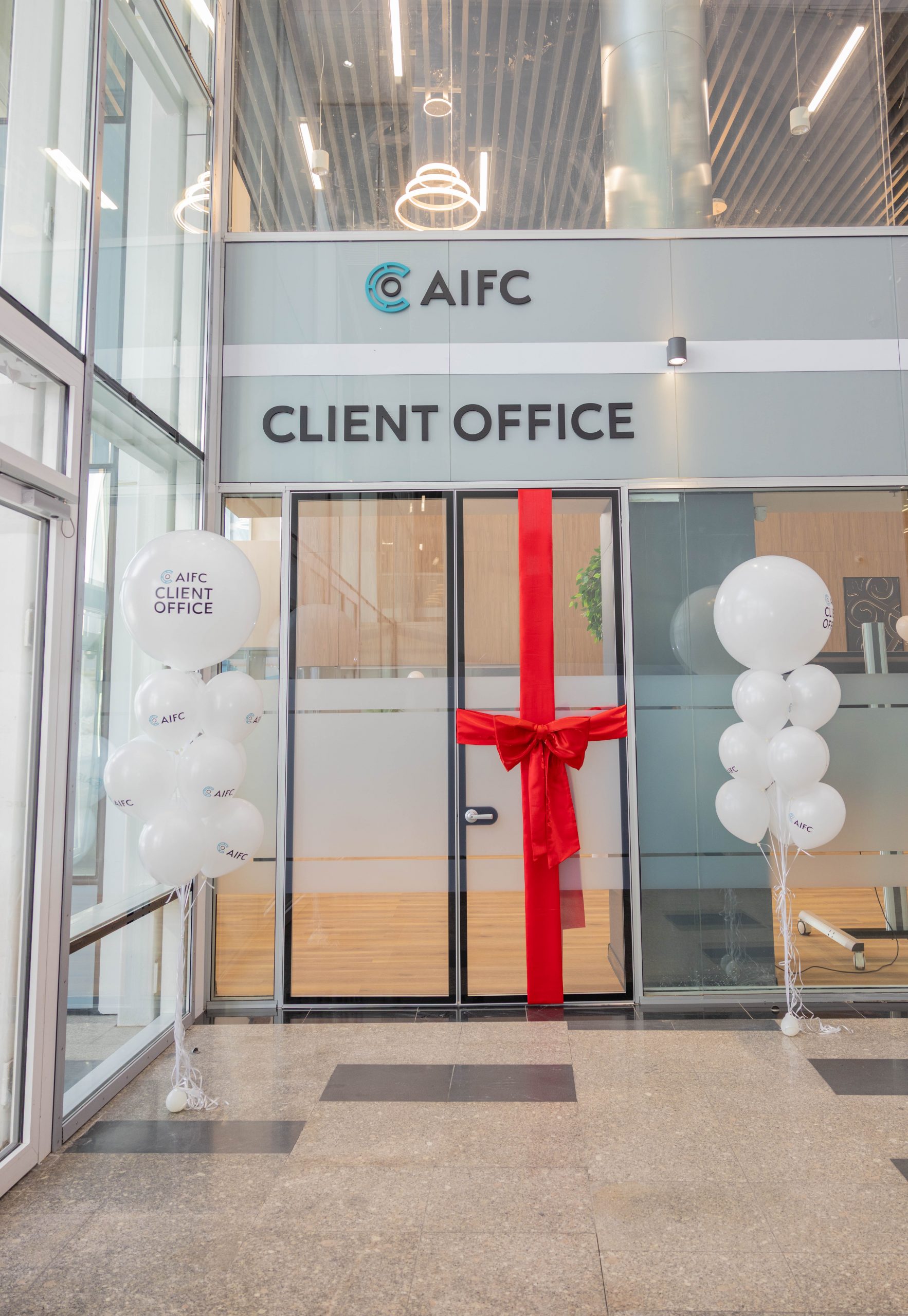
We establish and operate licensed fund managers in the Astana International Financial Centre: an English common-law jurisdiction with a fintech sandbox that licenses in two to three months, 0% tax on qualifying income until 2066, and a regulator that already provides for tokenised fund units.
An individual who wants to put US$50,000 behind a producer in Vietnam, Indonesia or Uzbekistan has two conventional choices, and both of them fail for reasons that have nothing to do with the business being good.
The missing piece is aggregation.
A short-term loan is the correct instrument. It just has to arrive as one loan, from one lender, with one registration, one security package and one collection account, funded by many investors who each hold a transferable interest in it. That is a fund, and a fund needs a licensed manager. Building and running that manager is what we do.
One licensed vehicle between many investors and each borrower. Everything else in this structure follows from that shape.
Each note series or unit class is linked to a facility. If the loan pays, the series pays. The manager's own capital is never the source of repayment, which is also what keeps the manager out of deposit-taking.
The manager is not directly owned by a borrower. That removes transfer-pricing exposure on the loan, removes the governance conflict at authorisation, and is what investors' advisers look for first. Indirect ownership is not a workaround: arm's-length rules can still apply where a borrower controls the manager through an intermediate holder.
Written for multiple borrowers from day one. A fund that lends only to one party is a captive whatever its licence says; the second borrower is what makes it a credit business.
Lending money that belongs to other people requires a licence, and a licence requires a company, a resident executive, a compliance function and a regulator willing to approve all three. We build that at the Astana International Financial Centre, take it through the FinTech Lab in two to three months, and then run it. What stays with you is the part that should: your borrowers, your credit decisions, your investors.
We map your borrowers, investors and cash flows, confirm the structure is one AIFC can licence, and price it: licence route, capital, timeline and annual running cost, with the numbers attached. If it isn't a fit, we tell you before you spend anything.
Incorporation of the manager and the fund, the FinTech Lab application, conflicts framework, compliance manual, fund documents, loan and security templates, bank onboarding, through to authorisation.
Our team member holds the resident senior executive role the regulator requires, oversees compliance, onboards investors, handles reporting and distributions, and documents each facility.
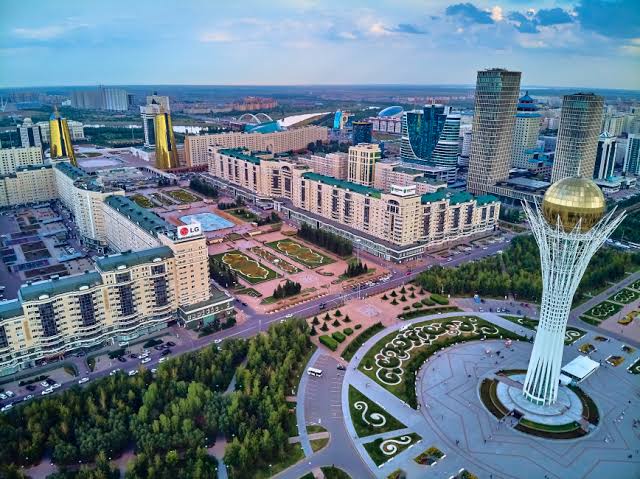
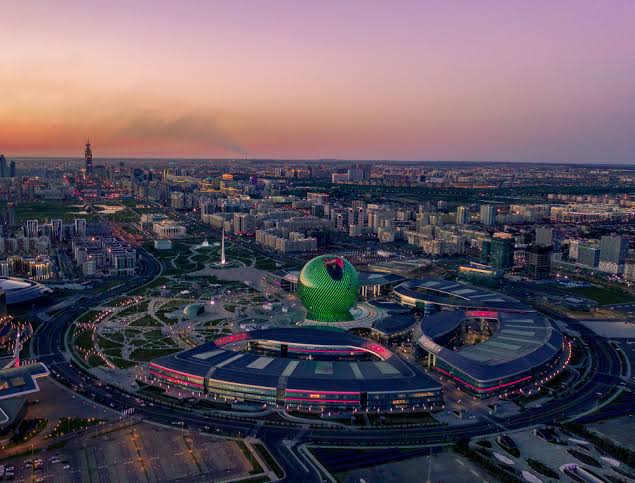
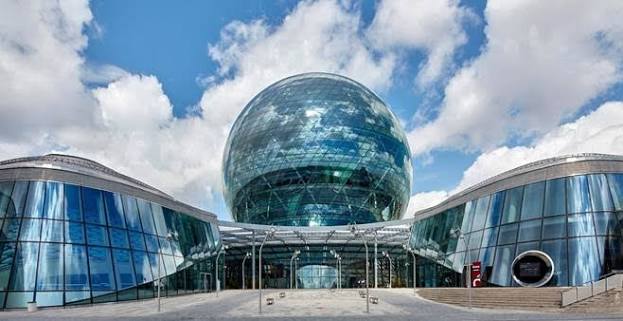
The AIFC was created by constitutional statute in 2015 and opened in July 2018 on the EXPO 2017 site in Astana. It has its own legal system based on English common law, its own court and arbitration centre with judges from England and Wales, its own regulator, and its own tax and currency regime, all operating in English.
It is one of a small number of financial centres worldwide built on this model, alongside Dubai's DIFC, Abu Dhabi's ADGM and Qatar's QFC, and by some distance the least expensive of them to establish and operate in.
Kazakhstan's capital since 1997, purpose-built, and the largest economy in Central Asia. The AIFC campus occupies the EXPO 2017 grounds, a short drive from the government district and the airport.
Direct flights reach Hanoi and Da Nang, as well as Dubai, Istanbul, Frankfurt, Seoul, Beijing, Tashkent and most CIS capitals. The single time zone, UTC+5, overlaps the Gulf morning and the East Asian afternoon. Office space on the AIFC campus starts around US$20 per square metre per month, so a registered desk for a small manager costs a fraction of Dubai or Singapore. Cold winters, warm summers, and a resident international community built up around the Centre since 2018.
A fund at the AIFC is two entities: a licensed manager that runs it and a separate fund that investors own. AFSA's Collective Investment Scheme rules offer two fund categories and several legal forms.
| Fund type | Who can invest | How it's offered | Regulatory treatment |
|---|---|---|---|
| Exempt Fund | Professional Clients only, minimum subscription US$50,000 | Private placement; no public offer, no prospectus | Notification-based; lighter ongoing requirements. The right vehicle for a lending fund. |
| Non-Exempt Fund | Retail and professional investors | Public offer with an approved prospectus | Full registration and supervision; higher capital and governance. |
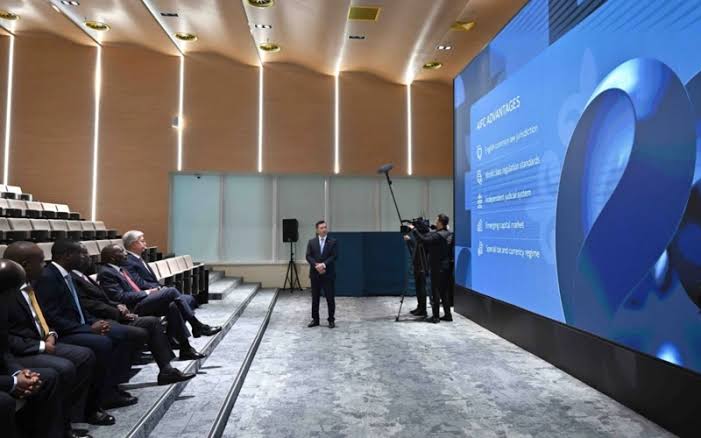
The FinTech Lab is AFSA's live regulatory sandbox: a real licence, with real clients, granted to firms testing a new model, on lighter capital and substance terms and a defined path to full authorisation at the end of two years.
Capital is evidence of twelve months' operating expenses rather than the standard base requirement. Fees are charged at 10% of the standard schedule, with a modest review fee on submission. Time is two to three months from a materially complete application, on a rolling basis. The licence runs two years, extendable, then transitions to the full regime.
A plain lending fund does not pass the innovation gate.
AFSA has become more selective about Lab admissions. "We pool money and lend it" is a finance company, not a fintech. What passes is a platform, and a credit fund built the right way is one. We frame the application around five things that are all genuinely part of the model.
Digital onboarding and KYC of cross-border professional investors, with nationality screening at the door.
Subscription in USD or stablecoin through AFSA-licensed conversion venues; the fund receives fiat.
Tokenised, transferable units issued to whitelisted holders on a registry the manager controls.
Borrower telemetry streamed to holders of each series: production data, milestones, sale confirmation.
Distributions and secondary transfers between whitelisted investors, first inside the fund's own register.
The word carries a lot of noise. In a licensed fund it means one specific, unglamorous thing: the register of who owns what is kept on distributed-ledger technology instead of in a spreadsheet, and the entries on it can be transferred between approved holders.
Most tokenisation projects struggle to explain what problem they solve. In seasonal production lending the fit is unusually good, for four reasons that come from the crop cycle itself.
A shrimp cycle runs 180 days. A rice or coffee harvest has a date. Lending against production means many short, self-liquidating facilities rather than one long exposure, and each one is naturally its own series: this pond, this harvest, this maturity. Tokenised series make that granularity administrable. Fifty investors across eight harvests is a spreadsheet problem in a conventional fund and a non-problem on a register.
Someone lending into aquaculture usually has a view: this producer, this region, this species, this season. A blended book takes that choice away. Series-level units give it back, and let the investor hold a specific, identifiable facility rather than a share of everything the fund has ever done.
Ponds and fields are measured constantly: stocking density, survival rate, feed conversion, biomass, water quality, harvest weight, sale confirmation. That telemetry can be streamed to the holders of the series it belongs to. Very few private credit assets produce a verifiable operational signal between origination and maturity. Production agriculture does, and it turns a blind six-month wait into something the investor can watch.
A large share of what investors demand in emerging-market production lending is not credit risk, it is illiquidity: money committed for a full cycle with no way out. A transferable unit, even one that can only move between whitelisted professionals, puts a floor under that. Every point of required return that liquidity removes is a point the borrower does not pay.
The registry, whitelisting and transfer controls come from a licensed white-label provider in the centre. The manager answers to the regulator for the infrastructure, so we use providers who have already met its standards.
At launch, transfers happen inside the fund's own register, approved by the manager. Secondary trading on an AFSA-licensed venue comes later, when volume justifies it.
Tokenisation does not change what a regulator permits, widen who may invest, or move money a borrower's central bank will not release. It improves distribution and liquidity. The structure underneath still has to be sound.
Assessment delivered. Local counsel engaged in the borrower's country. Owners' source-of-funds file assembled for the regulator.
Manager and fund incorporated and capitalised. Independent director appointed. Conflicts framework and fund documents drafted. Lab application filed.
AFSA review and authorisation. Bank account opened. Tokenisation registry and investor onboarding live.
Investors subscribed, first facility documented and secured, funds wired to the borrower's registered loan account.
For a first fund of a few million dollars, the difference between centres is almost entirely people and capital: how many resident professionals you must employ, and how much regulatory capital must sit idle before you lend.
| AIFC · FinTech Lab | DIFC · Innovation Testing Licence | Singapore · A/I LFMC | |
|---|---|---|---|
| Time to licence | 2–3 months | 4–6 months | 4–6 months |
| Regulatory capital | 12 months' operating cost | Negotiated; anchored to US$70k | S$250k plus 120% of risk requirement |
| Resident staff | Light | 2 officers, combinable | 2 full-time resident professionals |
| Self-sustaining at | ~US$3.2m loans outstanding | ~US$5.2m | ~US$10–13m |
| Tax on the manager | 0% to 2066 with substance | 9%; 0% on qualifying fund income | 17%; fund incentives need S$200k local spend |
| Tokenised units | Frameworks in force | Through the sandbox by rule | Most mature, under full licence |
| Stablecoin subscriptions | Licensed exchanges with bank channels | Licensed venues, direct to USD | Legal; banks are the obstacle |
| Investor recognition | Needs a sentence of explanation | Strong | Strongest in Asia |
DIFC becomes the better answer when investors are mostly Western or Gulf and the fund will exceed US$5 million in its first two years. Singapore becomes the better answer when investors are Singapore-based and the fund will exceed US$10 million. Below those thresholds — where a first fund almost always sits — AIFC's cost base is decisive. We build and run at the AIFC only. If your fund belongs somewhere else we will say so, but we will not be the ones to take it there.
Someone does. AFSA requires a resident senior executive, and the tax exemption requires substantial presence: real staff and expenses commensurate with the business. Under our operating retainer, our team member holds the resident senior executive role, so you don't have to relocate. If you'd rather hold it yourself, Astana is one of the cheaper places on this list to satisfy a "be here" requirement.
Yes, with one rule: the fund never holds tokens. Investors send USDT to an AFSA-licensed exchange or OTC desk, which does its own KYC and source-of-funds checks, converts, and pays fiat to the fund's account. Those venues have established channels with Kazakh banks, and AFSA itself is piloting USDT and USDC for its own fees. Converting for the fund's own account keeps the manager out of the digital-asset licensing regime entirely.
It's possible but it's the hardest version to license. A manager owned by its own borrower has a conflict the regulator assesses at authorisation, related-party transfer-pricing exposure on the loan, and a harder story with investors. It can be done with an independent director holding the deciding vote on that borrower's facilities, a cap on the borrower's share of the fund, and full disclosure. Where the borrower has no funds outside its home country, the cleaner path is an independent manager with an option for the borrower's owners to buy in later.
Nothing at the AIFC changes the rules where the money lands. A loan into Vietnam, for instance, is a short-term foreign loan under the State Bank's regime: a registered foreign-loan account, a report or registration, a 5% withholding on interest, and a 20% statutory interest ceiling where Vietnamese law governs. We build the facility documents to those rules with local counsel, once, and reuse them for every borrower in that country.
Outbound USD wires from Kazakh banks to Southeast Asia work; we've tested them. Stablecoin conversion runs through licensed exchanges with existing bank channels. For clients who want a second banking relationship outside Kazakhstan, an AIFC company can hold accounts abroad.
The FinTech Lab licence transitions to full authorisation, which means the standard base capital and substance requirements, applied to a firm that by then has two years of operating history, audited accounts and a book. We plan the graduation from day one, because investors' advisers will ask.
Three reasons. A fund that lends only to one party reads as a captive to the regulator and to investors. Loans to unrelated producers become the pricing benchmark that protects the first borrower's rate. And a manager at the AIFC only covers its running cost at about US$3.2 million of average loans outstanding, which one borrower rarely reaches alone.
I spent several years at Google working with enterprises across developing Asia, helping them scale their infrastructure. I learned quickly that one of the hardest limits on scale had little to do with the business itself. It was the raw difficulty of moving investment capital in, and moving returns back out.
I opened Cyan to offer an alternative built on aggregated short-term lending, so that companies in emerging Southeast Asia can move capital internationally at the same speed they move it at home.
Tell us who borrows, who invests, and where the money has to land. We'll come back with a costed AIFC route — licence, capital, timeline and annual running cost — and a plan for getting there.